
7 Signs Your Dryer Vent Is Clogged (and Why Winter Matters)

Samson Ferrell
Owner, Total Cabin and Home Maintenance

How to Tell If Your Dryer Vent Is Clogged
Most people figure out the signs your dryer vent is clogged the slow way. The towels need a second cycle, then a third, and eventually somebody blames the dryer and starts shopping for a new one. More often than not, the dryer is fine. The vent behind it is packed with lint and the hot, wet air has nowhere to go.
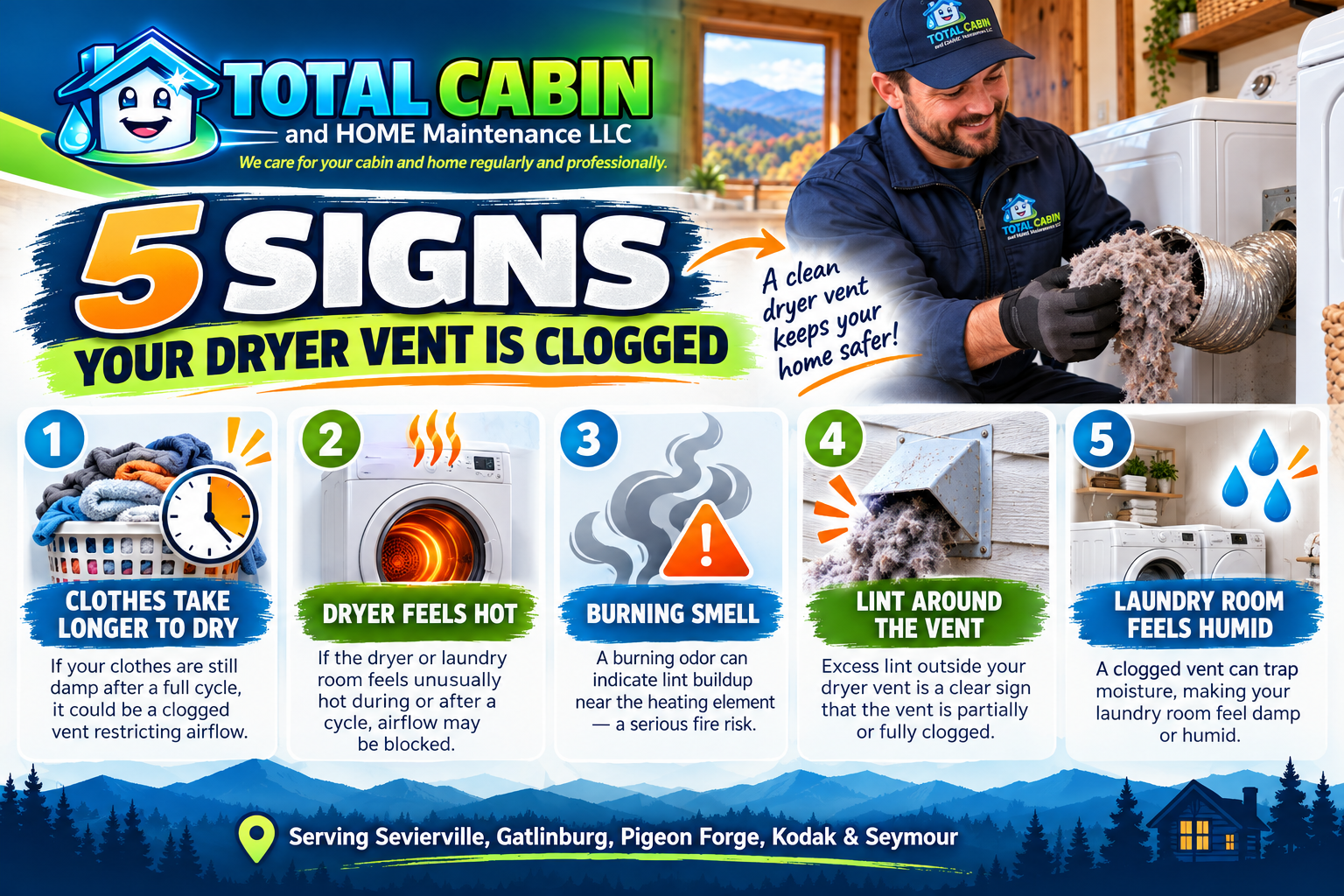
Quick Reference: 7 Signs Your Dryer Vent Is Clogged
- Loads take longer than one cycle to dry: The most common early sign.
- The dryer or laundry room gets unusually hot: Heat is building up instead of venting out.
- Clothes come out hot but still damp: Moist air is stuck in the drum.
- A burning or scorched smell: Lint near a heat source. Stop using the dryer until it's checked.
- Lint around the dryer door or on the floor behind it: It's being pushed back out instead of through the vent.
- The outside vent flap barely opens: Not enough airflow is making it out.
- It's been more than a year since the vent was cleaned: Even if you haven't noticed anything else.
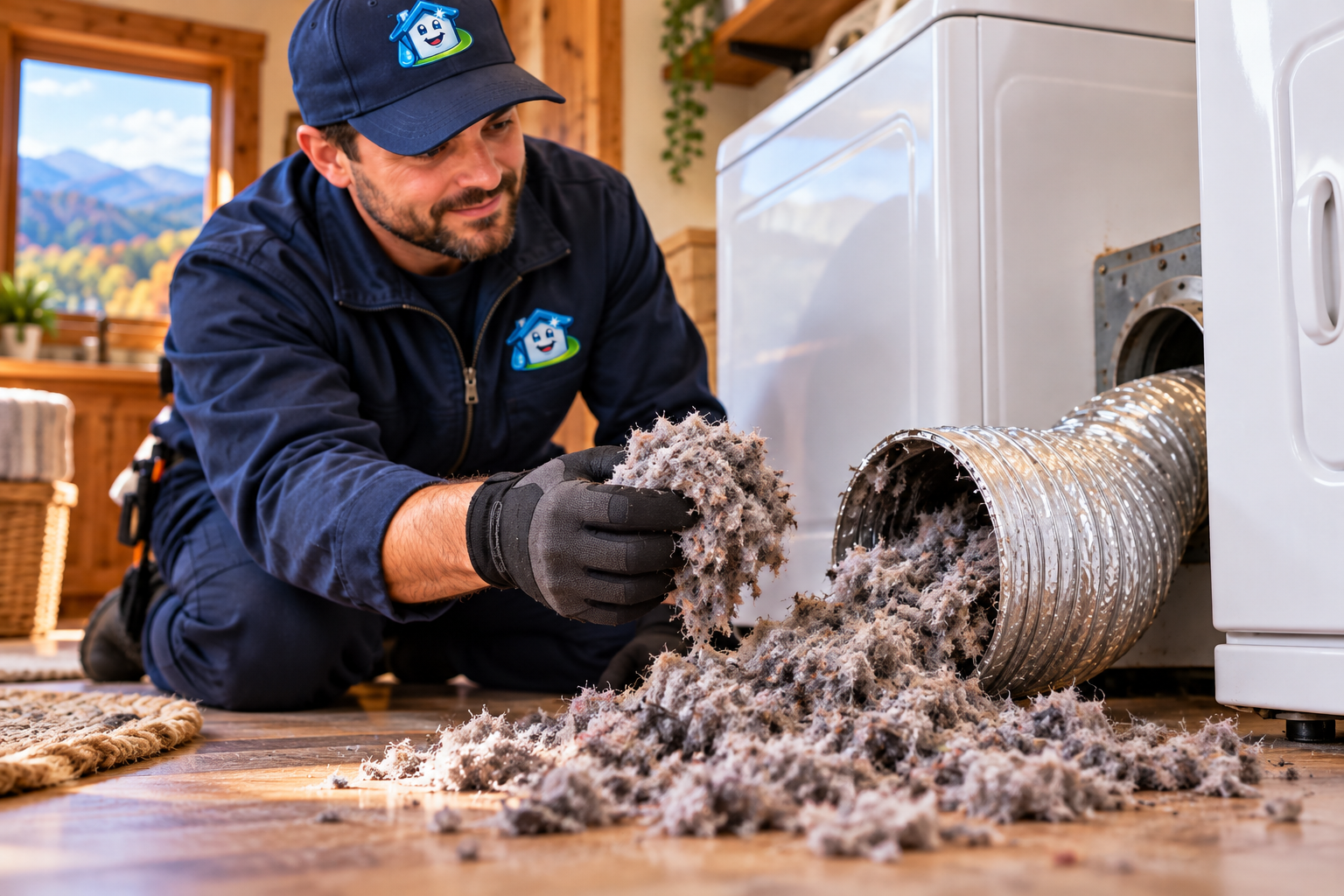
The lint screen catches a lot, but not all of it. The rest gets carried down the vent line and settles in the bends, the seams, and at the outside cap. Over months, it builds into a real blockage. A clogged vent makes your dryer run longer and hotter, which costs you money and adds fire risk at the same time.
I'm Samson Ferrell, owner of Total Cabin and Home Maintenance, and I've spent several years cleaning dryer vents in homes, cabins, and rentals across Sevierville and the surrounding area. Here's what to watch for and why this time of year is when it matters most.
Why a Clogged Dryer Vent Is a Bigger Deal in Winter
Dryers Work Hardest When It's Cold
Once the weather turns, people stop line-drying, start washing heavier clothes and blankets, and run more loads overall. That means more lint going into a vent that may already be partly blocked.
According to the U.S. Fire Administration, failure to clean is the leading cause of home clothes dryer fires, and those fires are more common in the colder months. That lines up with exactly what we see in the field: the heavier the laundry season, the more vents we pull full of packed lint.
Cabins and Rentals Get Hit Harder
Rental cabins around Gatlinburg and Pigeon Forge often run the dryer nonstop on turnover days, with sheets and towels for every bed in the place. A vent that would last a year in a regular home can clog up much faster in a busy rental. Long vent runs are common in cabins too, since the laundry room isn't always on an outside wall, and longer runs give lint more places to settle.
Things That Make Dryer Vents Clog Faster
- Long or twisting vent runs: More bends, more places for lint to catch.
- Flexible foil or plastic hose behind the dryer: The ridges trap lint easily and crush when the dryer is pushed back.
- Heavy use: Big families and rental turnovers.
- Bird or critter nests at the outside cap: More common than you'd think in wooded areas.

What to Do If You See the Signs
Quick Checks You Can Do Yourself
Start with the easy stuff. Clean the lint screen every load. Pull the dryer out and make sure the hose behind it isn't crushed or kinked. Then go outside while the dryer is running and see if the flap opens and you can feel a good flow of warm air.
If the airflow outside is weak, the blockage is somewhere in the line, and that's not something a shop vac at either end will fully fix.

What a Professional Cleaning Covers
A proper dryer vent cleaning clears the whole line, not just the ends you can reach. We use rotary brushes and air to push everything out from the dryer to the outside cap, check the cap and flap, and make sure the connection behind the dryer is in good shape.
What's Included in Our Dryer Vent Cleaning
- Full-length line cleaning: From the back of the dryer all the way to the outside.
- Exterior cap check: Clearing lint, nests, or debris and making sure the flap moves freely.
- Connection check behind the dryer: Looking for crushed or damaged hose.
- Airflow test when we're done: So you know it's actually clear.
You can see the rest of what we handle inside the home on our interior maintenance page.
Frequently Asked Questions about Clogged Dryer Vents
How often should a dryer vent be cleaned?
Once a year is a good baseline for most homes. Larger households, long vent runs, and rental cabins with frequent turnovers often need it more often.
Can a clogged dryer vent really cause a fire?
Yes. Lint is very flammable, and a blocked vent traps heat right where the lint is building up. That's why a burning smell is a stop-using-it-now sign, not a someday sign.
Will a clogged vent damage my dryer?
It can. A dryer that's constantly running hot and long works harder than it was built to, which wears out heating elements, thermostats, and other parts sooner.
Conclusion
If you're seeing any of the signs your dryer vent is clogged, especially long dry times or a burning smell, don't wait on it. Winter is when dryers run the most and when vent-related fires are most common, so now is the right time to get it cleared.
At Total Cabin and Home Maintenance, dryer vent cleaning is one of the quickest jobs we do, and one of the most important for safety.

If your dryer's been dragging, request a quote and we'll get your vent cleared before the heavy laundry season hits.
Samson Ferrell | Total Cabin and Home Maintenance
Tags & Topics
Samson Ferrell
Owner, Total Cabin and Home Maintenance
Samson Ferrell is the owner of Total Cabin and Home Maintenance, a home and cabin exterior maintenance company based in Sevierville, Tennessee. He and his crews handle window cleaning, pressure washing, house washing, dryer vent and HVAC duct cleaning for homeowners, cabin owners, and rental property managers throughout Sevier County and the greater Smoky Mountain region. He writes about the practical side of keeping a mountain property in good shape — what actually needs doing, how often, and what it costs.