Late Fall Gutter Cleaning: Why One Pass Isn't Enough in the Smokies

Samson Ferrell
Owner, Total Cabin and Home Maintenance
What Late Fall Gutter Cleaning Is and Why It Catches People Off Guard
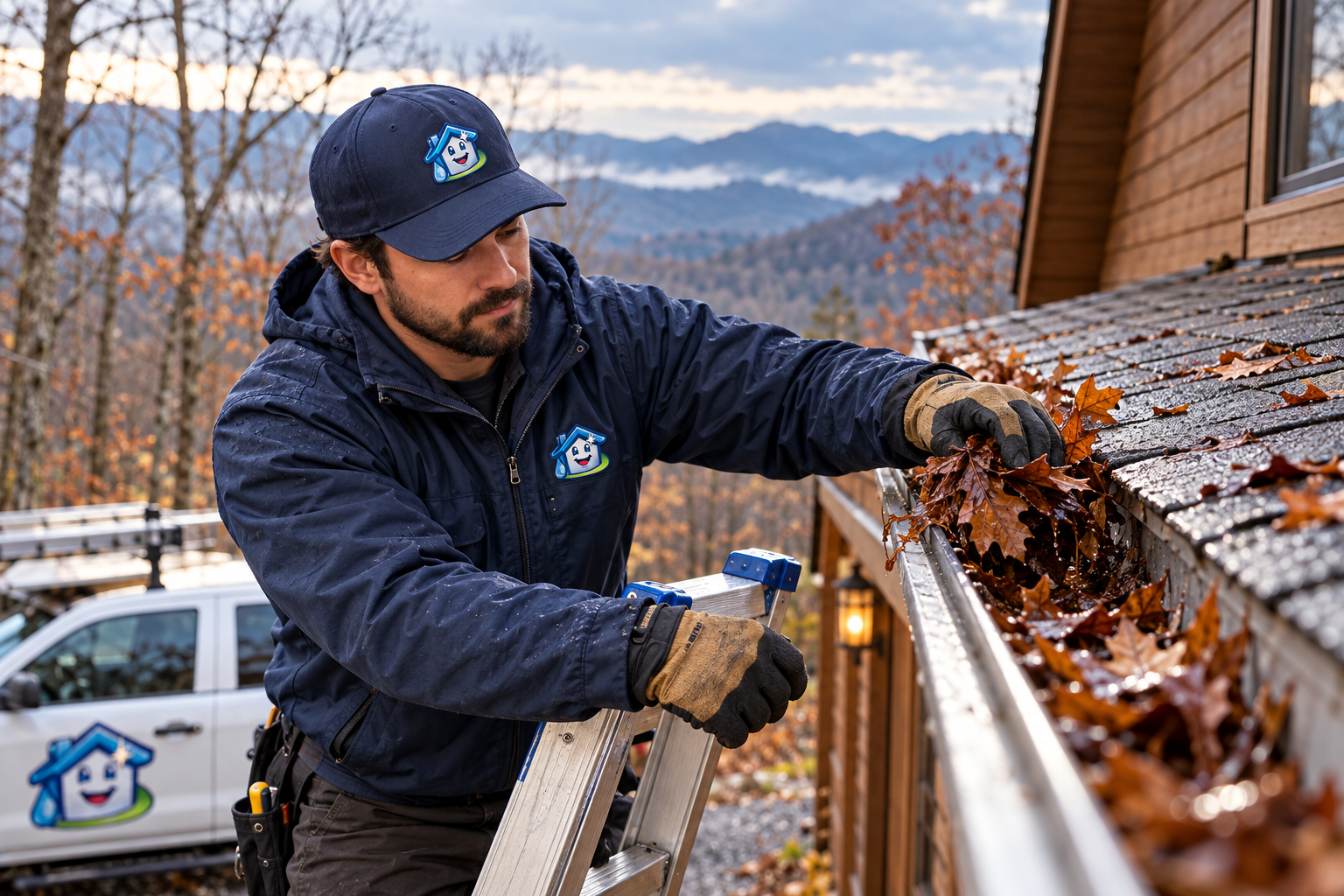
Late fall gutter cleaning is the second pass after the leaves are actually down. A lot of homeowners clean their gutters in September or October, feel good about it, and then look up in mid-November to find them packed full again. That's not bad luck. In the Smokies, the trees simply aren't finished dropping when most people do their first cleaning.
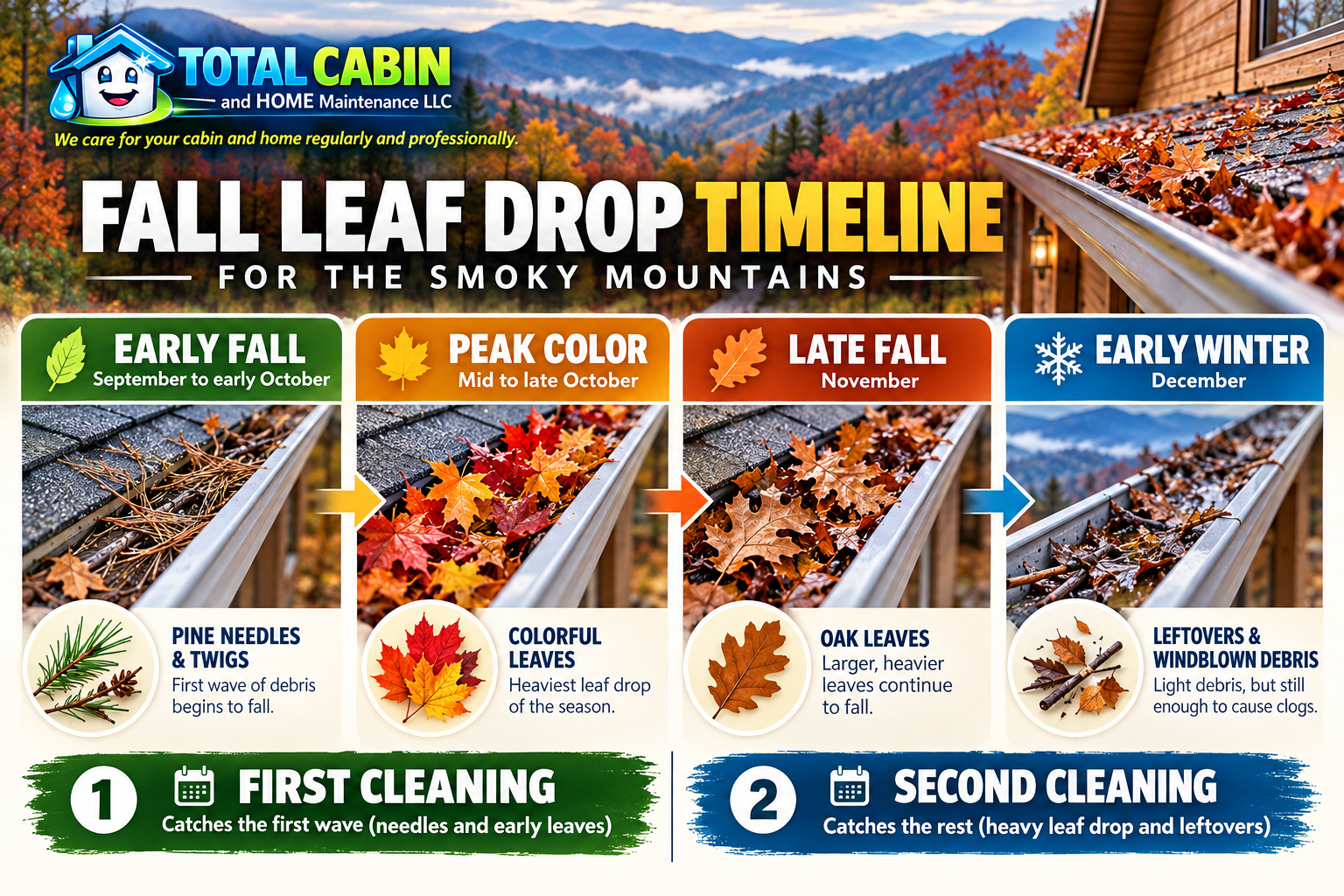
Quick Reference: When Gutters Fill Up Through the Fall
- Early fall (September to early October): Pine needles, twigs, and early drop from maples and poplars. Key benefit of cleaning now: clears summer debris before fall rain.
- Peak color (mid to late October): The heaviest single wave of leaves. Key benefit: none yet, they're still coming.
- Late fall (November): Oaks and stragglers finish dropping, often in stages. Key benefit of cleaning now: gutters go into winter actually empty.
- Early winter (December): Light leftovers and windblown debris. Key benefit: a quick check after a big wind or storm.
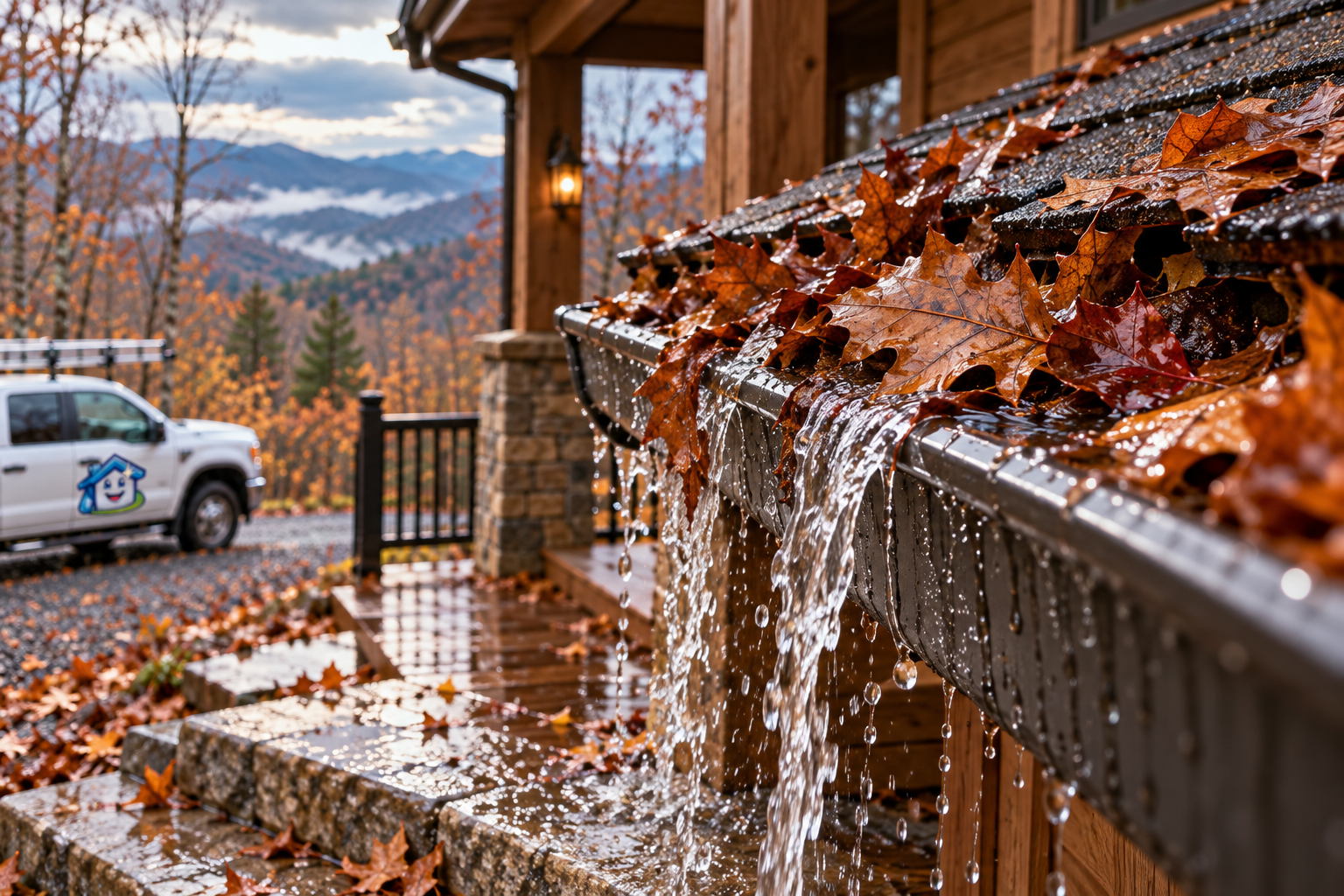
Oaks are a big part of the reason. They're all over these mountains, and they're known for hanging onto their dead leaves well past peak color and letting go a little at a time. A gutter cleaned in mid-October can be half full again by Thanksgiving, especially on a wooded lot.
I'm Samson Ferrell, owner of Total Cabin and Home Maintenance, and I've spent several years cleaning gutters on homes and cabins all over Sevierville and the surrounding mountains. In this post I'll walk you through why late fall gutter cleaning matters here, what happens if you skip it, and how to time it.
Why a Second Gutter Cleaning Matters in the Smoky Mountains
The Trees Here Drop Late and Drop a Lot
Homes around Sevierville, Gatlinburg, and Pigeon Forge tend to sit closer to trees than the average neighborhood in a flatter part of the state. According to the National Park Service, Great Smoky Mountains National Park is home to more than 100 native tree species, and a lot of that variety spills right into the yards and lots around the park. Different trees drop at different times, so the leaf drop stretches out over weeks instead of happening all at once.
What Full Gutters Do Over Winter
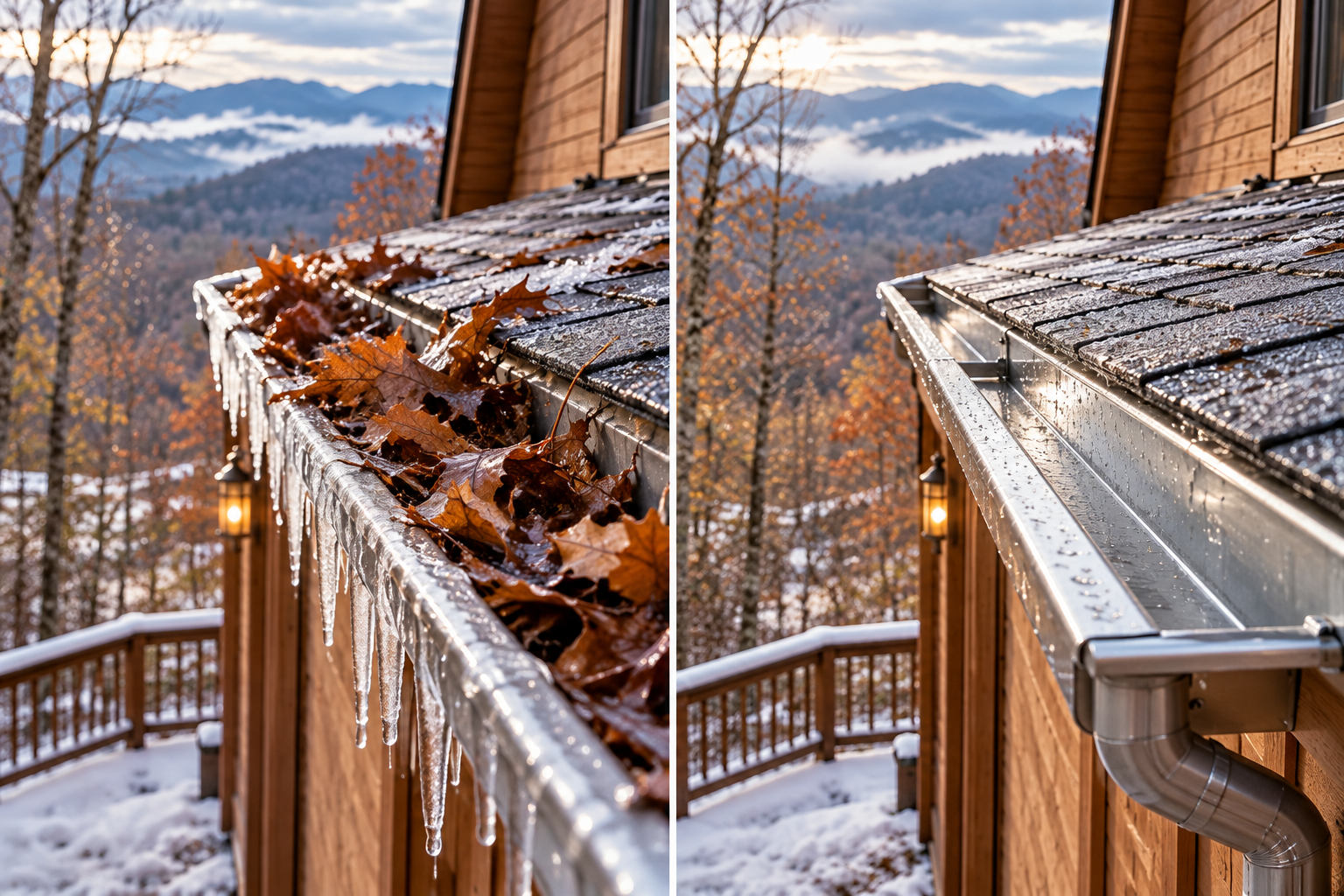
A clogged gutter in November turns into a bigger problem in January. Wet leaves hold water against the roof edge and fascia board. When temperatures drop overnight, that water freezes, and the ice backs up under shingles or pulls on the gutter brackets with real weight.
What Can Happen When Gutters Go Into Winter Full
- Ice buildup along the roof edge: Water that can't drain freezes and backs up under shingles.
- Rotting fascia boards: Constant moisture behind wet leaves softens the wood over time.
- Pulled or sagging gutters: Packed leaves plus ice is a lot of weight on the hangers.
- Water at the foundation: Overflow pours straight down instead of out through the downspout.
How to Time Late Fall Gutter Cleaning
Wait for Most of the Leaves to Come Down
The best time for the second pass is after the bulk of the oaks have dropped, which in most years around here is mid to late November. Go too early and you're doing it a third time. Wait too long and you risk a hard freeze locking wet leaves in place.
A good rule of thumb: if you look at the trees hanging over your roof and they're mostly bare, it's time.
Don't Forget the Downspouts
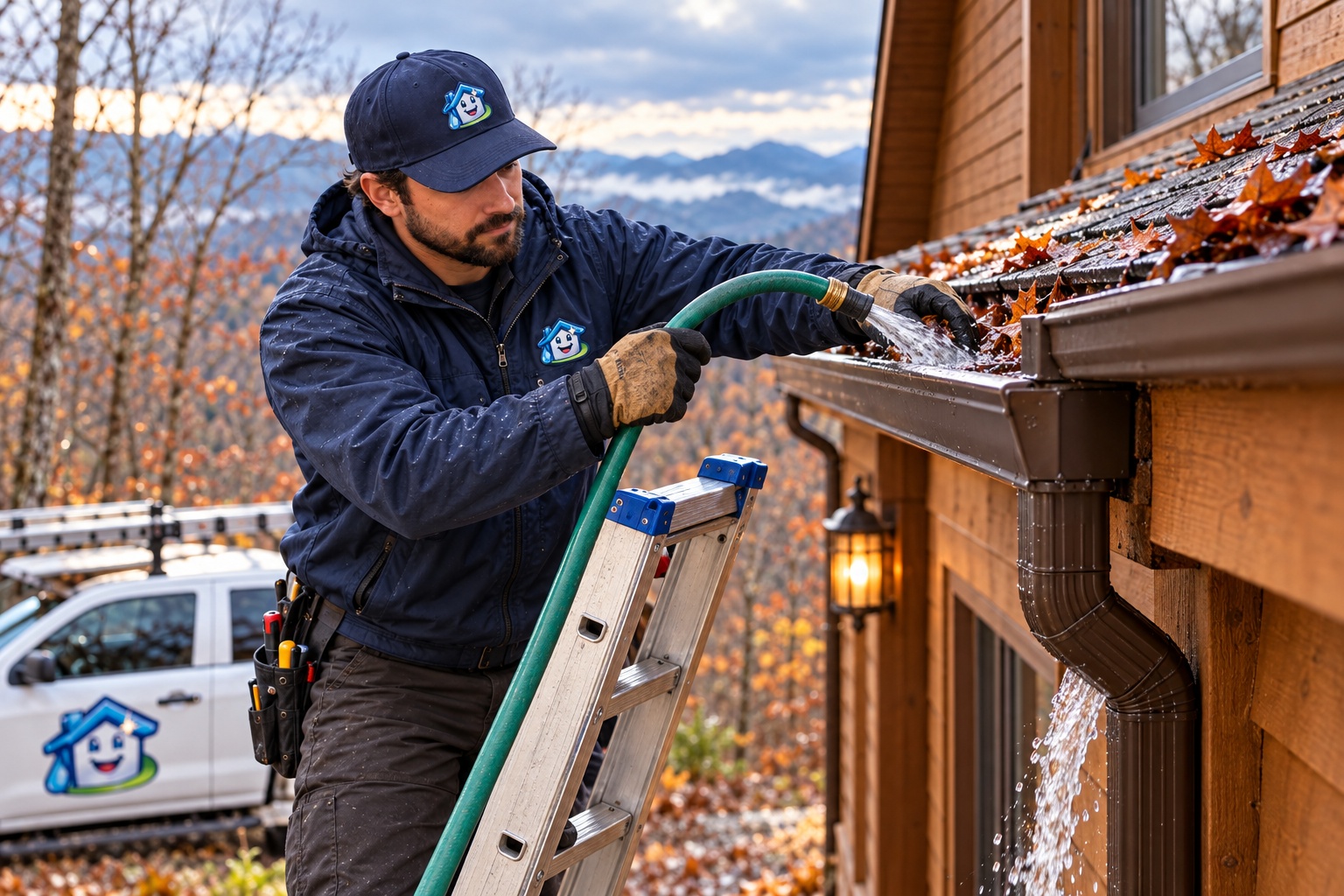
Leaves don't just sit in the gutter. They get washed down into the downspout and wedge in the elbows, which means a gutter that looks clean from the ground can still back up the first time it rains hard. Every gutter cleaning we do includes flushing the downspouts to make sure water is actually leaving the system.
What a Late Fall Gutter Cleaning Should Include
- Hand-clearing all gutter runs: Not just the visible front of the house.
- Flushing every downspout: Checking for clogs in the elbows and at ground level.
- A quick look at hangers and seams: Catching loose brackets before winter weight hits them.
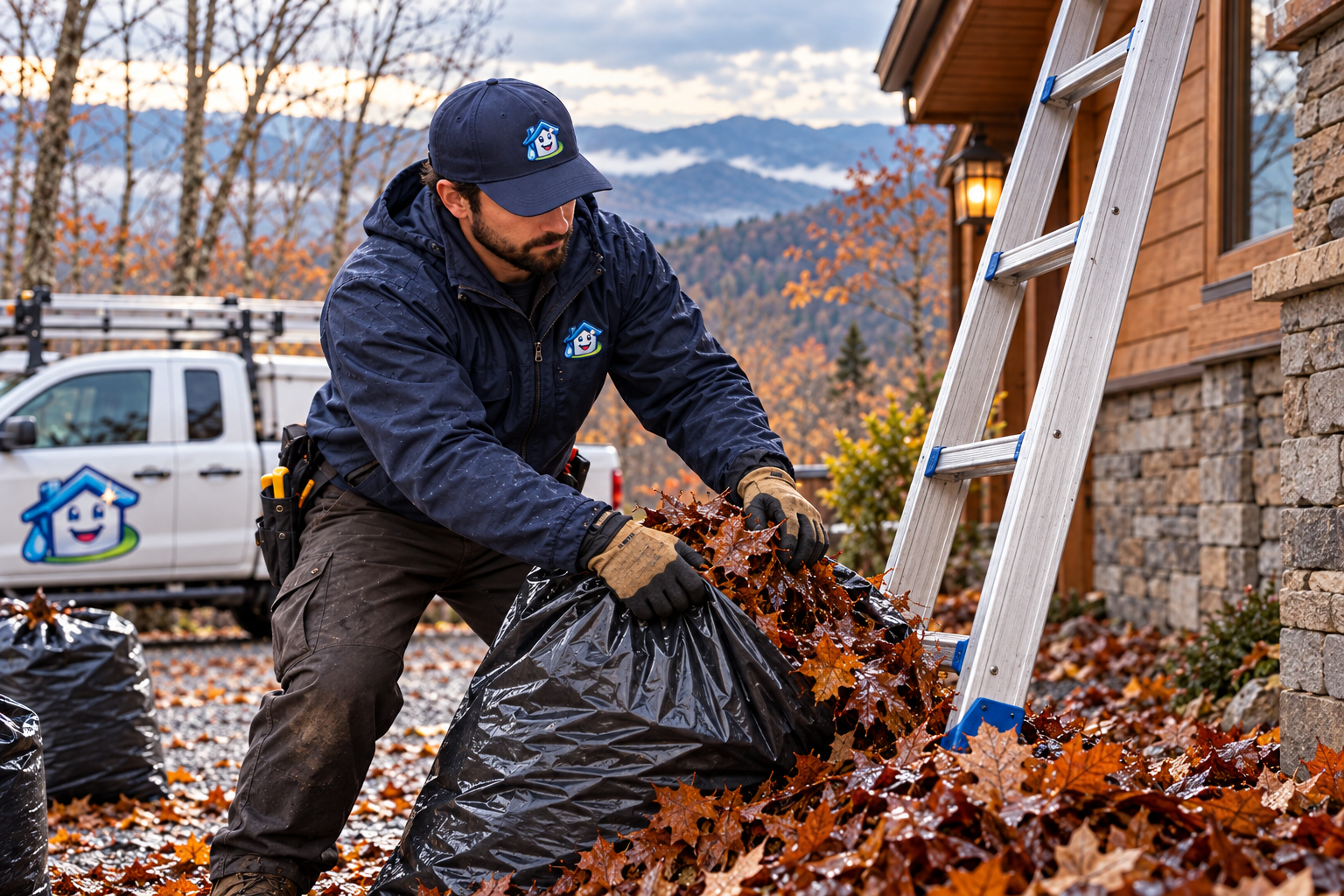
- Cleanup on the ground: Leaves and gunk bagged and gone, not left in your flower beds.
If your home is on a steep lot or has a second story, that's a job we'd rather you leave to us than climb yourself. Our exterior cleaning team handles gutters on everything from single-level ranches to three-story cabins.
Frequently Asked Questions about Late Fall Gutter Cleaning
How many times should gutters be cleaned in the fall?
On a home with a lot of trees nearby, twice is common here: once in early to mid fall and again in mid to late November after the oaks finish. Homes with few trees close by can often get away with one well-timed cleaning.
Is it too late to clean gutters in November or December?
No. As long as the gutters aren't frozen solid, cleaning them out in late fall or early winter is better than letting them sit full until spring.
Do gutter guards mean I can skip late fall cleaning?
Guards help, but they don't stop everything. Small debris, oak tassels, and pine needles still work their way in or pile up on top, so it's worth having them checked at least once a year.
Conclusion
Late fall gutter cleaning is one of those jobs that feels like a repeat but really isn't. The first cleaning handles the first wave of leaves. The second one makes sure your gutters go into winter empty, which is when it counts.
At Total Cabin and Home Maintenance, we do a lot of second-pass cleanings this time of year, especially on wooded lots around Sevierville, Gatlinburg, and Pigeon Forge.

If your gutters are filling back up, request a quote and we'll get you on the schedule before the first hard freeze.
Samson Ferrell | Total Cabin and Home Maintenance
Tags & Topics
Samson Ferrell
Owner, Total Cabin and Home Maintenance
Samson Ferrell is the owner of Total Cabin and Home Maintenance, a home and cabin exterior maintenance company based in Sevierville, Tennessee. He and his crews handle window cleaning, pressure washing, house washing, dryer vent and HVAC duct cleaning for homeowners, cabin owners, and rental property managers throughout Sevier County and the greater Smoky Mountain region. He writes about the practical side of keeping a mountain property in good shape — what actually needs doing, how often, and what it costs.